





Driving Miss Daisy

Actors at The West Side Theatre Guild rehearse a performance of Driving Miss Daisy in the Gerry Street Theatre in Gary, Ind., Wednesday, March 13, 2013. The lighting design for the show had to transport the audience to several different locations and time periods, utilizing the same set.
It has been suggested that, when it comes to lighting design, my forte is in the concert and musical genres. While I enjoy lighting for music immensely, I get the same satisfaction from lighting straight plays, especially in intimate venues. When I found out that longtime client The West Side Theatre Guild was producing Driving Miss Daisy in their Gerry Street Theatre (a small proscenium space that seats just over 130), I jumped at the opportunity to light it. I enjoy the subtle nuances that are possible (with both lighting as well as acting) when the front row is a mere seven feet away from the stage.
Lighting Driving Miss Daisy was challenging because all the story locations (including Daisy’s house, her son’s office, a cemetery, grocery store, nursing home, and the famous car) take place on the same set, and must be differentiated with lighting. This might seem pretty straightforward, however, the Gerry Street Theatre only has 42 dimmers. While I’ve successfully lit shows of similar scale with less than 12 dimmers, having only 42 dimmers to split between 9 acting areas and various specials required for all the story locations required a lot of thought and planning. I could only get away with one to two specials for just the most important locations, leaving the less importation locations to be lit with my basic systems only.
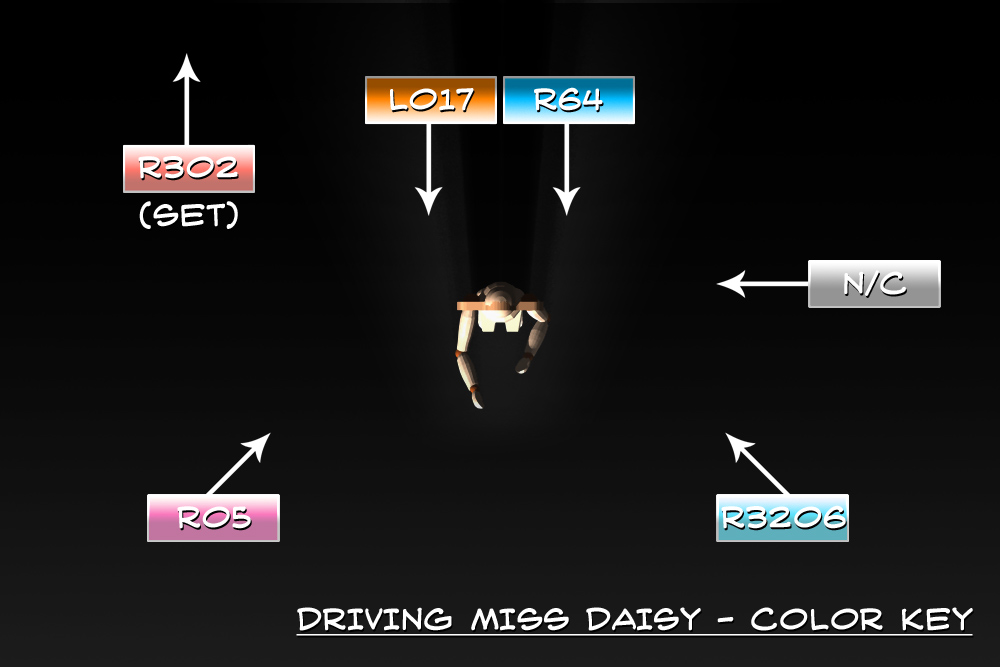
The color key for Driving Miss Daisy included a warm frontlight color with a hint of pink (R05) to accommodate the multiracial cast, along with an extremely subtle cool color (R3206) as its compliment, which in actuality, also served as another warm color when dimmed down. The warm feel continued for my wall toners (R302), and my toplight (L017), which I joked was inspired by looking through a glass of iced tea, something Daisy might have served to her guests? My cool toplight (R64) was used for nighttime looks as well as later in the show when Daisy becomes older and more unstable. Rounding out my systems was a no-color “kicker” wash from stage left, something I’ve brought over from my video work. I usually throw this in to help add definition to actors on shallow stages.
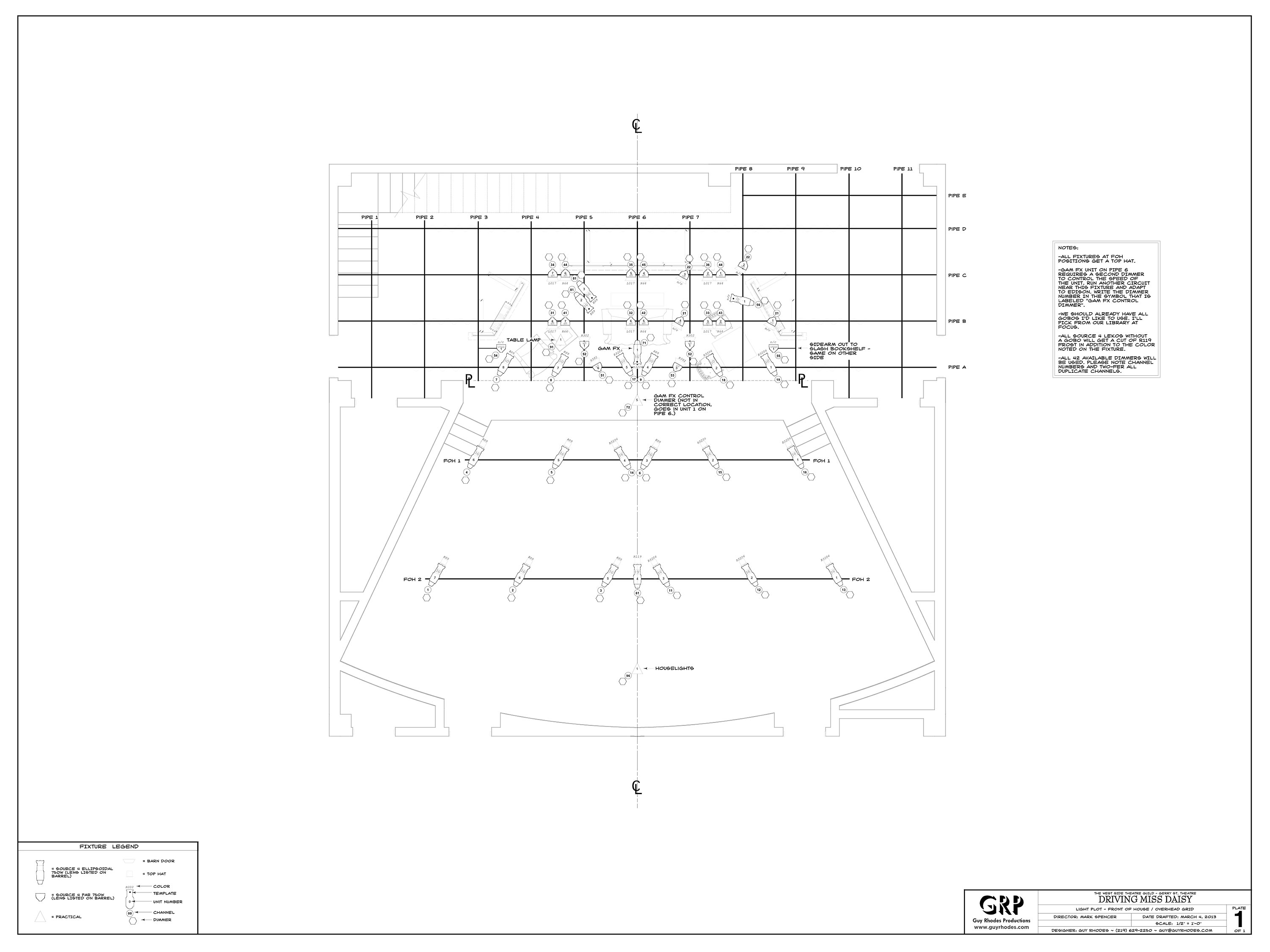
Click to see a larger view of the light plot, drafted using Vectorworks.

One of the specials I used for Daisy’s house was a gobo on the upstage wall, for the appearance of sunlight shining through permanent window shutters that would be found in a southern plantation style home. I also employed two no-color “slashes” on the bookshelves stage left and right, which served to highlight the books and add some dimension to these areas.

The famous driving scenes were done in a very simplistic way, with the actors miming the entire thing using furniture from the house brought downstage center. Even the car’s steering wheel was mimed. To help add some realism to these scenes, I employed a GAM Film FX unit in a Source 4 36 degree unit mounted directly overhead to add some subtle moving texture across the actors.
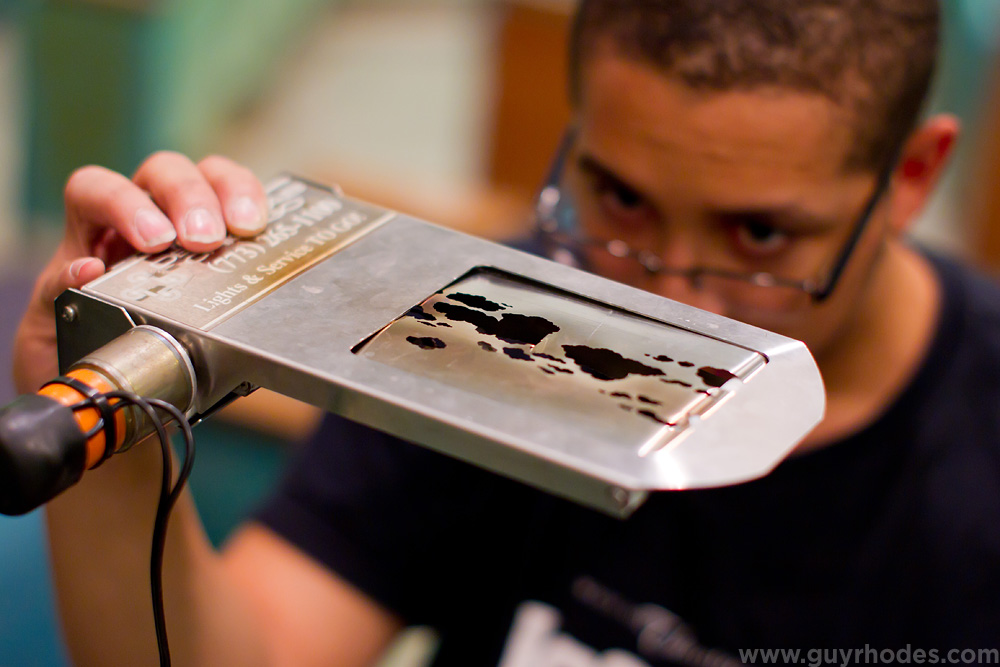
This was my first time using a GAM Film FX unit, and I was disappointed with how often the thin metal loop in the unit became stuck and stopped moving. The rental house warned me that the loops didn’t last too long, so I can’t say I was completely surprised that the rental loop wasn’t flawless. Luckily, WSTG master electrician Andre Campbell (pictured above) took it as a personal challenge to make the unit work, long after I’d given up. He did just that after about 45 minutes of coaxing the loop with my Leatherman.
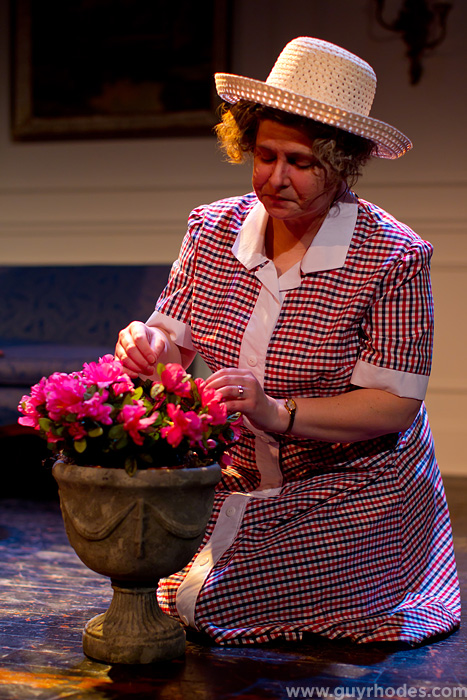 The cemetery visit scene between Daisy and Hoke was one of the scenes I afforded myself the use of a special system (a two-fered gobo wash using 2 Source 4 36 degrees meant to appear as warm sunlight shining through trees).

An early morning power outage scene at Daisy’s house took me completely by surprise in rehearsal. It wasn’t until our first tech run-through that I saw that Daisy was going to carry a lit candle into the living room at the top of the scene. I allowed the lights to fade up slowly on an 8 count, allowing the natural candle light to briefly fill the entire theater. This kind of thing wouldn’t have worked in a larger space, but in a small theater like the Gerry Street, it worked very well!
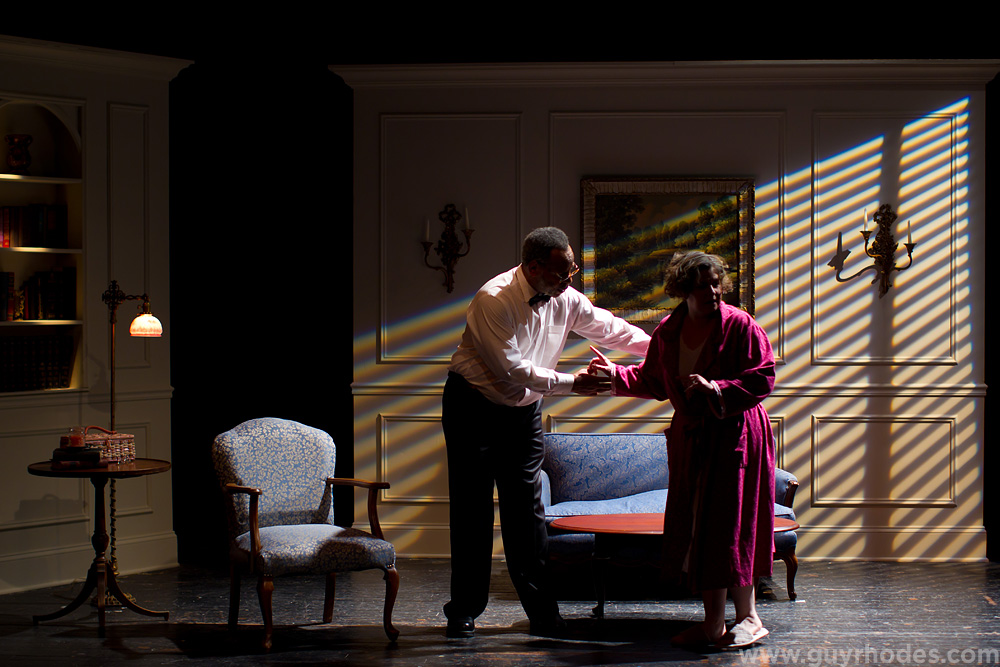
When the older Daisy has a mental lapse, thinking she is again a youthful schoolteacher, I wanted the audience to feel lost right along with her. I made a radical shift from the warm, even palette the house had been lit with in previous scenes, instead lighting the room starkly with only the no-color kicker system and the window gobo, with just a subtle amount of frontlight fill.
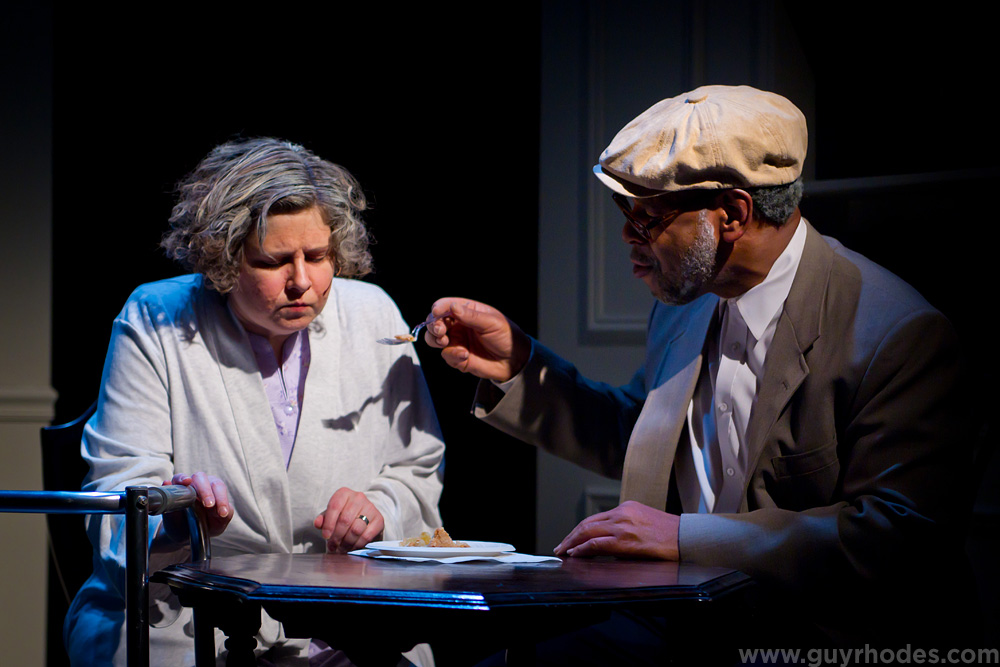
I’m still on the fence about my final look of the show, where Hoke feeds Daisy Thanksgiving pie at her nursing home. When I read nursing home in the script, I immediately thought of the uninviting nursing home my great-grandmother spent her last days in. My cool color choices here reflect this, though this is really one of the most loving scenes in the entire play. I almost wish I would have incorporated some warmth here for this moment, but this worked too.
DRIVING MISS DAISY GEAR LIST
Posted in Lighting Design by Guy Rhodes on March 20th, 2013.
|